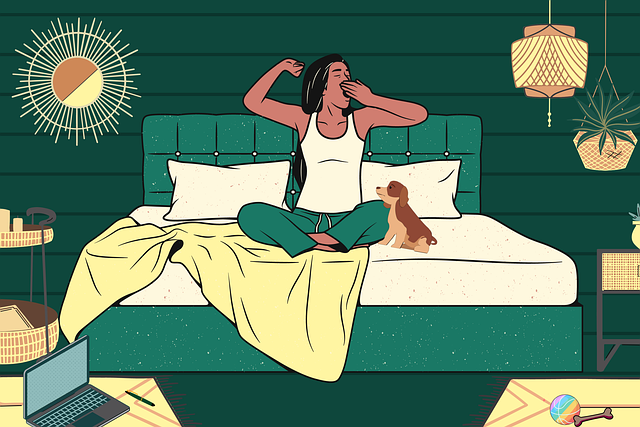
You fall asleep fine. Then you wake up at 2:47 AM, 3:15 AM, or 4:02 AM with your mind already running at full speed. Work problems. Money worries. That conversation from three days ago. Your heart pounds. Your body feels wired. Sleep is impossible.
This pattern repeats night after night. You are exhausted but your brain will not shut off during the hours you need rest most.
This is not random. Your body is trying to tell you something.
What happens in your body at 3 AM
Your sleep cycle moves through different stages throughout the night. Around 3 AM to 4 AM, you transition from deep sleep into lighter REM sleep. During this transition, your cortisol levels naturally begin to rise in preparation for waking.
If your nervous system is already stressed, this natural cortisol increase can push you fully awake. Your body interprets the cortisol spike as a threat signal. Your brain comes online looking for danger.
The danger your brain finds is your own thoughts. Worries that seemed manageable during the day feel catastrophic at 3 AM. This is because your prefrontal cortex, which handles rational thinking and perspective, is not fully active yet. Your amygdala, which processes fear and threat, is more active.
You are awake, flooded with stress hormones, and thinking with the most anxious part of your brain.
Why your thoughts race specifically at night
During the day, external stimulation keeps your mind occupied. Work tasks. Conversations. Movement. Screens. Your anxious thoughts exist but they compete with everything else demanding your attention.
At 3 AM, there is no competition. The house is quiet. Your partner is asleep. There is nothing to distract you from your own mind. Thoughts that were background noise during the day become the only thing you can hear.
Your brain also processes emotional experiences during sleep. If you experienced stress, conflict, or anxiety during the day, your brain works through those emotions at night. Sometimes this processing wakes you up before it is finished.
What your body is actually communicating
Middle-of-the-night waking with racing thoughts signals that your nervous system is stuck in a state of high alert. Your body is telling you that it does not feel safe enough to stay in deep rest.
This happens for several reasons:
- Unresolved stress accumulation. Your body experiences stress all day but you push through without processing it. By 3 AM, the accumulated stress has nowhere to go. It wakes you up demanding attention.
- Suppressed emotions. Feelings you avoid during the day surface at night. Anger you swallowed at work. Sadness you did not have time for. Fear you talked yourself out of. These emotions do not disappear when you ignore them. They wait until you are vulnerable and then demand to be felt.
- Dysregulated nervous system. Chronic stress keeps your nervous system in fight-or-flight mode. Even when there is no immediate threat, your body stays activated. The 3 AM wake-up is your body checking for danger because it believes danger is constant.
- Disconnection from your body. You spend your day in your head, ignoring physical signals. Tension in your shoulders. Shallow breathing. Clenched jaw. By nighttime, your body has been trying to get your attention for hours. When you finally stop moving, it forces you to notice.

Why 3 AM thoughts feel different from daytime thoughts
The thoughts that wake you at 3 AM feel more intense than daytime worries. This is not your imagination.
Research on circadian rhythms shows that negative emotions peak during the early morning hours. A 2013 study published in Frontiers in Neurology found that the brain processes negative stimuli more intensely between 3 AM and 5 AM compared to other times of day.
Your brain also has less access to positive memories and rational problem-solving during these hours. The same worry that you could talk yourself through at 2 PM feels unsolvable at 3 AM because you literally do not have full access to your reasoning capacity.
This is why people in crisis are told never to make major decisions in the middle of the night. Your brain is not capable of accurate assessment during those hours.
Common patterns in 3 AM racing thoughts
- The work spiral. You wake up thinking about a project deadline. Within minutes you are convinced you will fail, get fired, and lose your house. The catastrophic thinking accelerates until you feel panicked.
- The relationship replay. A conversation from days or weeks ago plays on repeat. You analyze every word. You script what you should have said. You imagine worst-case scenarios about what the other person really meant.
- The health anxiety loop. A physical sensation becomes evidence of serious illness. You mentally review symptoms. You calculate when you can call the doctor. You research conditions on your phone, which makes the anxiety worse.
- The money panic. Bills, expenses, and financial fears compound into overwhelming dread. You run calculations in your head. You imagine poverty, homelessness, or failure. The numbers never add up to safety.
- The vague dread. Sometimes there is no specific thought. Just a feeling that something is wrong. You scan for problems. Your mind jumps from worry to worry, never landing on anything concrete but never finding peace.
What does not work
You have probably tried many strategies to get back to sleep. Most of them fail because they fight against what your body is trying to do rather than working with it.
- Forcing yourself to relax. Telling yourself to calm down or stop thinking activates more stress. Your brain interprets the command as evidence that you are in danger, which increases arousal.
- Scrolling your phone. Blue light suppresses melatonin and signals your brain that it is time to be awake. Stimulating content keeps your mind active. You might distract yourself temporarily but you train your brain to expect screens when you wake at night.
- Rehearsing solutions. Trying to solve problems at 3 AM uses the least effective version of your brain. The solutions you generate are often unrealistic or anxiety-driven. You are not actually problem-solving; you are ruminating.
- Getting angry at yourself. Frustration about being awake adds another layer of stress. Now you are anxious about your problems and angry about your anxiety. Your nervous system has two reasons to stay activated.
What your body needs instead
Your body wakes you at 3 AM because it needs something from you. The racing thoughts are not the problem. They are symptoms.
- Acknowledgment. Your nervous system needs you to recognize that you are carrying stress. The middle-of-the-night wake-up is your body saying “notice this.” When you acknowledge the stress instead of dismissing it, the urgency decreases.
- Discharge. Stress hormones and emotions create physical tension. Your body needs to release that tension. This happens through movement, breathwork, crying, shaking, or other physical processes. Thinking does not discharge stress. Only physical release does.
- Safety signals. Your nervous system stays activated because it does not feel safe. It needs signals that you are not in danger. Slow breathing, gentle movement, and present-moment awareness tell your body it is safe to rest.
- Processing time. The emotions and experiences you avoid during the day need attention. Your body tries to process them at night. If you create time during the day to feel your feelings, they stop ambushing you at 3 AM.

Practices that help regulate nighttime waking
- Before bed breathwork. Spend 5-10 minutes doing slow, deep breathing before sleep. This signals your nervous system to shift into rest mode. It also gives your body a chance to release tension accumulated during the day.
- Daytime emotional check-ins. Set three times during the day to pause and ask yourself what you are feeling. Notice physical sensations in your body. This prevents emotional backlog that surfaces at night.
- Write worries down. Keep a notebook by your bed. When racing thoughts wake you, write them down. This signals your brain that the information is captured and does not need to be held in active memory.
- Body scan meditation. When you wake at 3 AM, do a mental scan from your head to your toes. Notice where you hold tension. Breathe into those areas. This shifts your focus from racing thoughts to physical sensation, which helps calm the nervous system.
- Morning processing. Spend 10 minutes each morning acknowledging how you feel. Let yourself sit with difficult emotions instead of pushing them away. This creates a container for feelings so they do not erupt at night.
When to seek professional support
Occasional nighttime waking is normal. Chronic waking with racing thoughts every night for weeks or months indicates that your nervous system needs help regulating.
Seek support if you experience:
- Waking at the same time every night for more than three weeks
- Panic or intense fear during nighttime waking
- Inability to fall back asleep for more than an hour
- Daytime functioning impaired by poor sleep
- Racing thoughts that include self-harm ideation
- Physical symptoms like chest pain or difficulty breathing
A meditation teacher, breathwork coach, or therapist can help you address the underlying nervous system dysregulation. Sleep medication treats the symptom but does not resolve what causes your body to wake you.
Frequently asked questions
Is waking at 3 AM a sign of a sleep disorder?
Not necessarily. Sleep disorders like sleep apnea or restless leg syndrome cause waking but typically without racing thoughts. If you wake gasping for air, snoring loudly, or with leg movements, see a sleep specialist. If you wake with mental anxiety but no physical sleep disruption, the cause is more likely nervous system activation than a sleep disorder.
Why do I only wake with racing thoughts on certain nights?
The nights you wake correspond to days when you experienced more stress, suppressed more emotions, or encountered specific triggers. Your brain processes the previous day’s experiences during sleep. High-stress days create more material for your brain to work through at night.
Can hormones cause 3 AM waking with anxiety?
Yes. Cortisol and other stress hormones naturally fluctuate during the night. Women in perimenopause or menopause often experience increased nighttime waking due to hormone fluctuations. Thyroid imbalances also affect sleep regulation. If you suspect hormones, work with a doctor while also addressing nervous system regulation.
Will meditation fix this problem?
Meditation helps regulate your nervous system, which reduces the likelihood of stress-driven waking. It is not a quick fix. Building a meditation practice takes time. Most people see improvement in sleep patterns after 4-6 weeks of consistent daily practice.
Should I get up or stay in bed when I wake at 3 AM?
If you cannot fall back asleep within 20 minutes, get up. Lying in bed awake trains your brain to associate your bed with wakefulness. Move to another room. Do something calming like reading or gentle stretching. Return to bed when you feel drowsy.
Why do my thoughts feel true at 3 AM but seem silly in the morning?
Your brain has limited access to perspective and rational thinking during early morning hours. The thoughts feel true because your prefrontal cortex, which evaluates accuracy, is not fully online. In the morning, when your rational brain is active again, you can assess the thoughts more accurately.
Can breathwork help with middle-of-the-night anxiety?
Breathwork regulates the nervous system by activating the parasympathetic response. Slow, deep breathing signals safety to your body and can help you transition back to sleep. Practicing breathwork during the day also reduces overall nervous system activation, which decreases nighttime waking frequency.
How long does it take to stop waking at 3 AM?
This depends on how long your nervous system has been dysregulated and what you do to address it. With consistent nervous system regulation practices like meditation, breathwork, and emotional processing, most people see significant improvement within 6-8 weeks. Some notice changes within days.
Learn practices to calm nighttime anxiety
If you wake frequently with racing thoughts, your nervous system needs support to regulate itself. Meditation and breathwork provide tools to process stress during the day so it does not wake you at night.
I teach meditation techniques and facilitate breathwork sessions in San Anselmo, California and online. Learn more about meditation training or explore breathwork for stress release.Contact me at kslezak304@gmail.com or call 415-250-7298 to discuss which approach fits your needs.