You downloaded a meditation app. You watched YouTube videos. You read articles explaining the technique. You understand the basics: sit down, focus on breath, notice when your mind wanders, return attention.
You tried it. Your mind raced. Your body fidgeted. Five minutes felt like an hour. You wondered if you were doing it wrong.
You tried again the next day. Then you skipped a day. A week passed. The app sent reminder notifications you ignored. You told yourself you would start again when life calmed down.
This pattern repeats for thousands of people. They assume meditation should be simple enough to learn alone. Then they struggle and conclude meditation does not work for them.
Meditation works. The question is whether you can learn it effectively without guidance.
The first obstacle: not knowing if you are doing it right
When you meditate alone, the same question cycles through your mind: “Is this even working?”
You sit. You focus on breath. Your mind wanders immediately. You return attention. Mind wanders again. Is this correct? Should your mind wander less by now? Are you supposed to feel something specific?
Without feedback, you cannot assess your practice. You might be doing everything correctly but assume you are failing because results differ from what you expected.
Or you developed a habit that prevents progress, but you cannot identify what needs adjustment because you are inside your own experience.
Self-doubt accumulates. After weeks of practice with no clear progress, you conclude meditation does not work for you. You quit.
A teacher provides feedback: “You are doing fine. Mind wandering is normal. Most people take six to eight weeks before they notice concentration improving.”
That confirmation lets you continue practicing instead of quitting in discouragement.
The second obstacle: the busy mind
Everyone struggles with mental noise initially.
Learning alone, you assume: “I cannot stop thinking, so I must be bad at this. My brain is not made for meditation. This is too hard.”
A trained teacher normalizes mental chatter and teaches you how to soften thoughts without fighting them, how to stay present, how to breathe correctly, and how to work with your mind instead of against it.
This saves months or years of trial and error.
Structure creates consistency
Meditating alone often leads to inconsistency. You skip days. You stop as soon as life gets stressful.
A teacher provides routine, accountability, rituals, a clear path, motivation, and steady support.
This is how meditation becomes a habit rather than an occasional attempt.
Without structure, meditation remains optional. With structure, meditation becomes part of your daily function.
Guidance through emotional difficulty
Meditation brings up emotions, memories, discomfort, restlessness, resistance, and sometimes tears.
When you practice alone, these moments feel scary or like something has gone wrong.
A teacher explains what is happening, holds space for emotion, guides you through discomfort safely, helps you stay regulated, and prevents overwhelm.
This matters especially for people with anxiety, trauma, grief, or burnout.
Without a teacher, many people quit when meditation becomes emotionally challenging, right before breakthrough occurs.
Matching technique to your nervous system
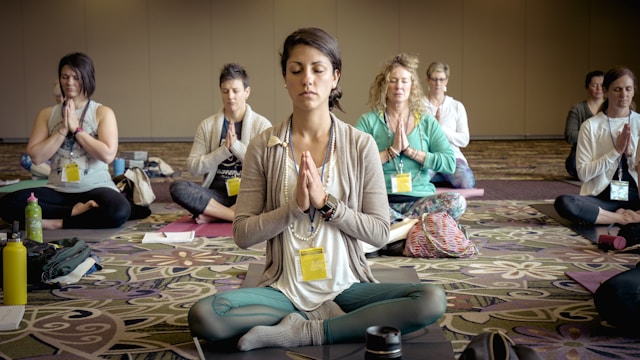
Meditation is not one-size-fits-all.
Some people need guided visualization. Others need breathwork, grounding practices, mantra meditation, somatic awareness, body-based calming, or heart-centered meditation.
A teacher evaluates your nervous system and guides you to what actually works for your specific wiring.
Self-guiding often leads to picking techniques that do not fit, getting frustrated, not progressing, and feeling stuck.
The right technique creates measurable change. The wrong technique creates more anxiety than you started with.
Moving from trying to meditate to actually meditating
Without guidance, most people stay stuck in the stage of forcing stillness, judging themselves, waiting for silence, and feeling like they are failing.
A teacher shows you how to soften, enter presence, connect to breath, quiet the inner critic, relax into the moment, and drop into your body.
This is when meditation becomes accessible rather than frustrating.
Breaking through plateaus
Everyone hits walls in meditation.
Alone, you think: “This is all I can get out of it. Maybe meditation just is not for me.”
A teacher recognizes your plateau and helps you shift technique, deepen your practice, work through resistance, expand your awareness, and reconnect to your intention.
This takes you from beginner to genuinely experiencing the benefits meditation produces.
Emotional safety that apps cannot provide
A person can read your energy, sense your emotional state, adjust the meditation, hold space, help you feel seen and supported, and give personalized guidance.
A recording cannot do this.
Meditation is inner work. Having support makes it safer and more effective.
Applying meditation to actual life
Meditation is not about sitting still for ten minutes.
Meditation is about regulating yourself, responding instead of reacting, breathing through conflict, calming anxiety, navigating stress, and staying grounded through challenges.
A teacher helps you integrate meditation into difficult conversations, emotional triggers, relationships, work stress, parenting, and daily life.
This is where measurable change happens.
From optional to committed practice
When you learn alone, meditation stays optional. When you learn with a teacher, meditation becomes a commitment and a practice that sticks.
A teacher helps you stay consistent, understand what is happening, grow your confidence, deepen your practice, heal emotionally, develop inner calm, and actually master meditation.
The journey becomes clearer and more effective.
What a teacher does not do
A teacher does not meditate for you. They do not eliminate difficulty from the practice. They do not promise instant results or guarantee specific outcomes.
A teacher also cannot make you practice between sessions. They provide tools, guidance, and support. You do the work.
If you are unwilling to practice regularly, hiring a teacher will not solve that problem. The teacher creates conditions for success. You still have to show up.
When you can transition to solo practice
You know you are ready to practice independently when you can sit for twenty to thirty minutes with reasonable comfort and concentration. Your mind still wanders but you can return attention to your anchor point without force.
You recognize when you are dissociating or avoiding versus when you are genuinely present. You know the difference between productive discomfort and signals to slow down.
You have navigated at least one difficult phase in your practice with your teacher’s support. You know these phases pass and you have strategies to work through them.
Your practice is self-sustaining. You meditate because it benefits you, not because someone expects you to.
Most people reach this point after eight to twelve weeks of consistent practice with a teacher. Some take longer. Some are ready sooner.
Transitioning to solo practice does not mean never working with a teacher again. Many people continue solo practice for months or years, then return to a teacher when they want to deepen further or work through new challenges.
Cost versus benefit
Meditation apps cost ten to fifteen dollars per month. Meditation instruction costs seventy-five to two hundred dollars per session depending on location and teacher experience.
The app is cheaper. The teacher is more effective.
If you try learning meditation alone four separate times, spending two to three months each attempt before quitting, you waste eight to twelve months and make no lasting progress. The app cost is minimal but your time and repeated frustration have value.
If you hire a teacher for ten sessions over three months, you spend seven hundred fifty to two thousand dollars. You establish a sustainable practice. The skill benefits you for years.
Calculate which investment produces better return.
Frequently asked questions
How many sessions with a teacher before I can practice alone?
Most people need eight to twelve sessions to establish solid foundation. Some need fewer. Others benefit from more. The number depends on your starting point, how frequently you practice between sessions, and whether difficult material surfaces that requires more support.
Can I switch teachers if the first one does not work for me?
Yes. Different teachers serve different needs. If you do not connect with your first teacher after three sessions, find a different one. Teaching style, personality, and approach all affect whether you benefit from working with someone.
What if I have tried learning meditation alone multiple times?
This pattern indicates you need external structure and accountability. Trying again alone will likely produce the same result. Hire a teacher to break the cycle.
Will the teacher assign homework between sessions?
Most teachers ask you to practice daily between sessions. The practice duration starts short, five to ten minutes, and increases as your capacity builds. Without practice between sessions, progress is minimal.
How do I know if a teacher is qualified?
Look for evidence of depth in personal practice, ten or more years of daily meditation. Ask about training in teaching meditation, not just practicing it. Ask how many students they have worked with and for how long. Trauma-informed training matters if you have trauma history.
Can I learn meditation from a teacher and still use apps?
Yes. Some teachers incorporate apps into their instruction. You might use an app for guided meditations between sessions while learning technique from a teacher. The combination works well for many people.
What happens if difficult emotions come up during practice?
Tell your teacher. They help you work through emotions safely or refer you to a therapist if the material requires therapeutic support. Do not suppress difficult emotions or stop practicing when they arise. Both responses prevent the release that creates relief.
Is group instruction as effective as private sessions?
Group classes cost less and provide peer support. Private instruction offers personalization and deeper attention to your specific needs. Both produce results. Private instruction accelerates learning. Group classes make instruction affordable while still providing structure and guidance.
Start with proper instruction
If you have tried learning meditation alone and quit, or if you want to establish a practice correctly from the beginning, working with a teacher produces better results than continuing to struggle alone.
I teach meditation in San Anselmo, California and online. I work with people who want practical tools for nervous system regulation, emotional resilience, and present-moment awareness.
My approach focuses on adapting technique to your specific nervous system rather than forcing you to adapt to a standard method. Initial sessions establish foundation. You decide how long to work together based on your progress and goals.
Learn about meditation training options or contact me to schedule an introductory session.